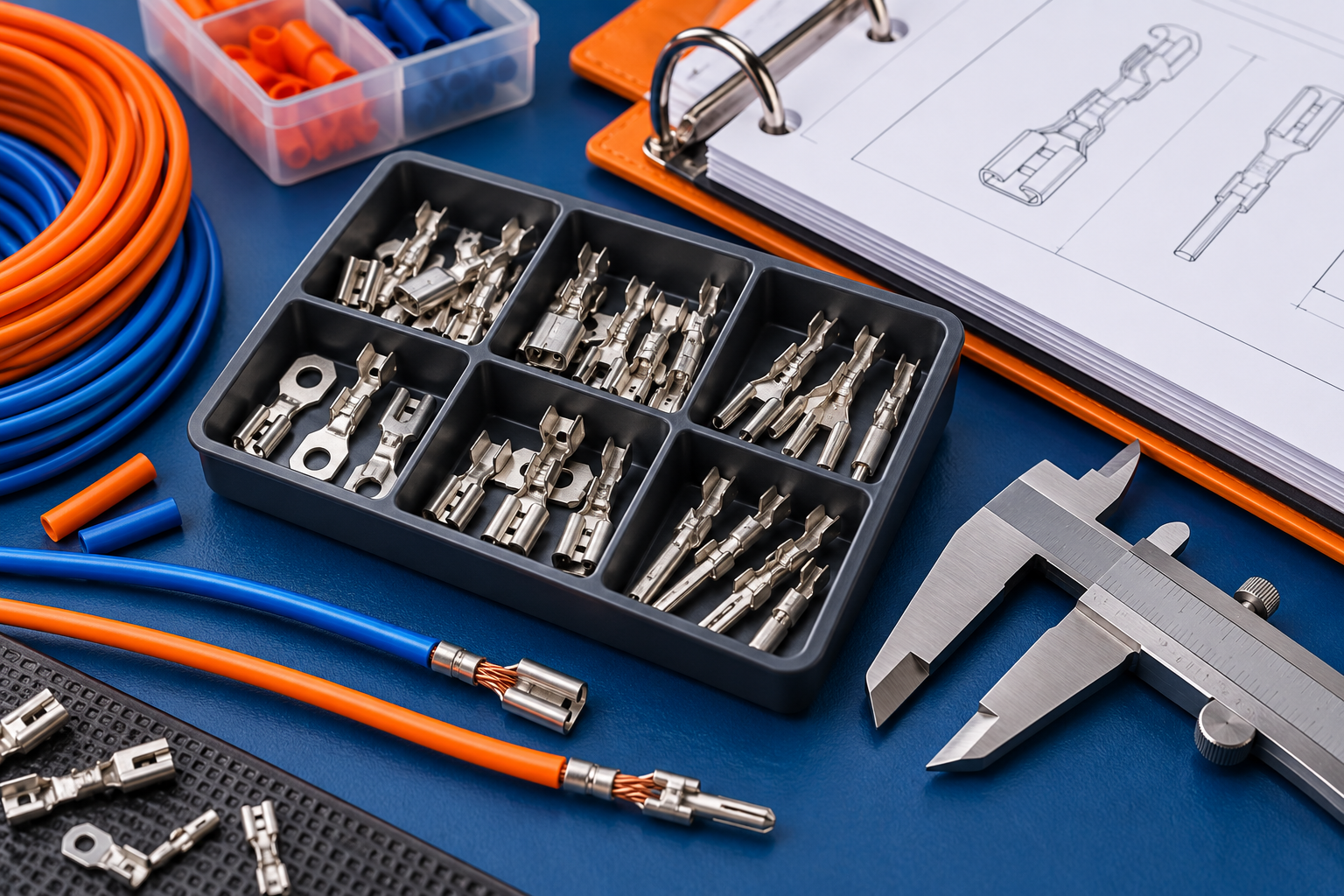
Summary. EPPTC lists 3900-0038 under Molex, while the manufacturer page identifies the numeric record 39000038 and lists 39-00-0038 among its search keywords. The official record describes a female crimp terminal and explicitly warns that only limited catalogue information is available. This FAQ explains how purchasing and engineering can reconcile those identifiers, organize wire and tooling evidence, and hand over open questions without turning an incomplete record into a production approval.
1. Which identity should the enquiry preserve?
Keep the EPPTC catalogue spelling in the enquiry, and place the manufacturer identifier beside it rather than silently correcting a BOM. Preserve the original supplier label, order number, internal material code and source URL as separate fields. A punctuation difference can be a formatting convention, but that conclusion must be traceable to a first-party record. Ask the supplier to confirm the orderable identity on its formal reply, especially when older paperwork and new labels use different numbering styles.
Begin with the EPPTC 3900-0038 product record and check the Molex official 39000038 record. Record the access date and save the applicable document revision when one is obtained. A webpage showing a part number is an identity reference, not a complete assembly instruction.
2. What does limited information mean for selection?
The manufacturer page supplies some material, plating, wire and termination fields. Those entries can help frame a document request, but they do not close every application question. Ask for the current customer drawing, applicable product specification and process documents before releasing a terminal for an intended housing or harness. Keep page-level facts distinct from the project requirement and record which source supports each comparison. Do not borrow a dimension, tool setting or qualification statement from a nearby terminal merely because the family name looks familiar.
EPPTC stores a Mini-Fit family association for this item. Treat that association as a route to catalogue discovery, not evidence that every Mini-Fit housing accepts it. The exact housing, cavity design and retention arrangement still need their own document trail. When a decision cannot be supported, keep it open and name the document or responsible role needed to resolve it.
3. How should wire and tooling evidence be handed over?
Create a process packet for the exact terminal and actual wire construction. Record conductor size, strand construction, insulation material and outside diameter as separate inputs. A wire-size entry alone does not establish that a production cable is acceptable. Ask the process owner to identify the applicable tooling instruction, applicator or hand-tool record and inspection criteria. Leave crimp height, strip length, pull-force limit and machine adjustment unset until controlled documents and the responsible validation process supply them.
If a sample is requested, label it with the complete material identity and keep its wire and tool setup traceable. A visually neat crimp is useful inspection evidence, but it cannot replace the applicable mechanical and electrical acceptance process. Preserve failed trials as well as successful ones so a later change in wire, tooling or supplier does not inherit an unexplained approval.
4. What belongs on the receiving checklist?
Keep the receiving record scoped to what was actually checked. Receipt of an undamaged package does not approve the mating combination or the finished harness. When a label, drawing or supplier description conflicts with the request, hold the affected material for clarification instead of normalizing the difference in a spreadsheet. The final project release should reference the evidence packet and its real responsible approval, not this automated editorial review.
5. Where can related catalogue records be found?
Use the Molex brand page, connector terminal category, Mini-Fit family series page and power-connections application page as navigation. Shared tags help locate records; they establish neither interchangeability nor suitability for a particular electrical load.
6. FAQ and conclusion
Does a similar part number prove substitution?
No. Compare complete orderable identities and current controlled documents, including packaging and process implications. Keep any proposed substitute separate until the responsible project process resolves the differences.
Does the catalogue provide a production recipe?
No. A catalogue field is an input to selection. Production setup needs applicable tooling and process evidence for the exact terminal and wire. A screenshot or an informal recommendation should not become an unversioned machine instruction.
Conclusion. Resolve identity first, then make the housing, wire, tool and open-document questions visible in one handoff. For a document-led enquiry, contact Lianxinlian Electronics with the original label, intended housing, wire construction and available revisions.
Manufacturer source
Author: Lianxinlian Electronics Product Information Team. Technical data quality review: Lianxinlian Electronics Technical Data Quality Team performs automated source, language and internal-link completeness checks. This review does not represent human engineering approval or approval of product suitability.