Build a traceable comparison for KET ST741332-3 using its official product record and drawing, while keeping wire, mating and process decisions configuration-specific.
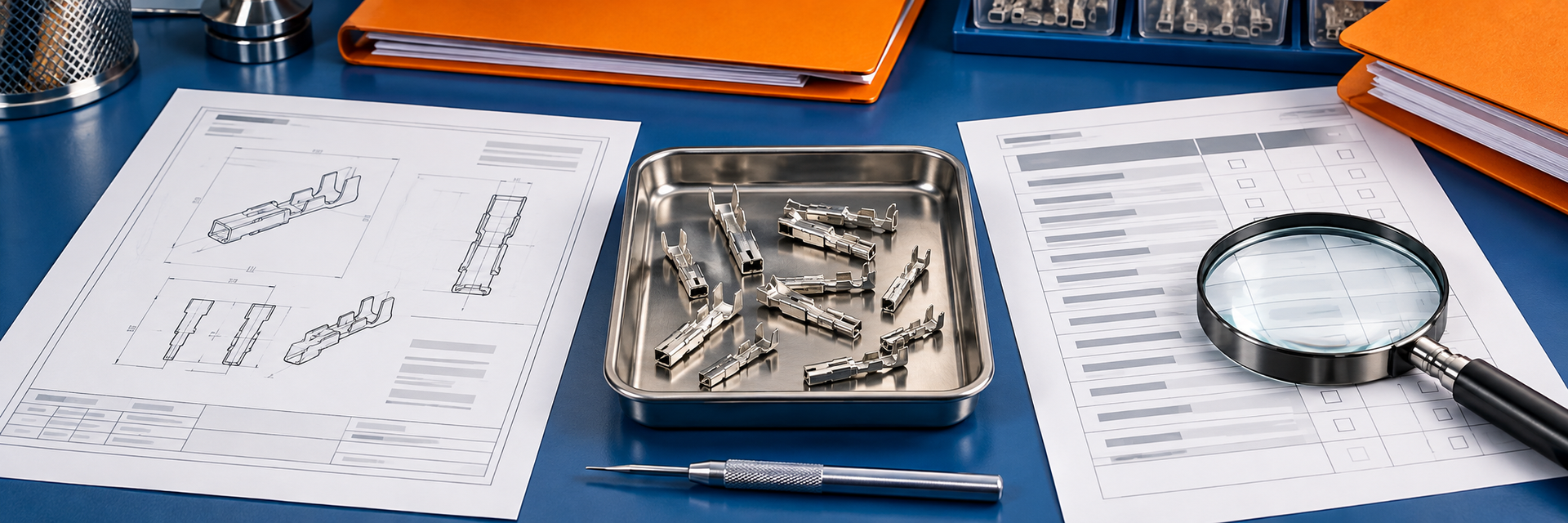
A purchasing enquiry often starts with a simple request: find another terminal for an existing harness. A useful answer needs more than a similar photograph or a shared series label. This guide uses the real EPPTC ST741332-3 catalogue record to organize that enquiry before a replacement is named. The original banner is a generic document-review scene; it does not represent the exact terminal shape or a validated assembly.
1. Freeze the baseline before comparing candidates
KET identifies ST741332-3 as a 060-series male terminal. Its official page links a customer drawing. Retain the complete ordering number, the source URL and the original item description in the comparison register. Do not shorten the reference to a family name. Keep a proposed replacement in a separate column so that a later edit cannot silently turn a candidate into the baseline item.
Add the actual purchasing reference and observed package label where available. If the label differs from the BOM, preserve both strings and open an identity question. A stock description or a handwritten abbreviation cannot resolve that discrepancy. The baseline should identify the intended item and the evidence held today, while leaving unknown configuration fields visibly pending.
2. Compare the scope of each document
The PDF linked from the official page is a family customer drawing with multiple terminal entries. Locate the relevant entry rather than transferring a value from the nearest row. Record document identity, retrieved revision and the table or view being used. If the ordering suffix is represented differently in a drawing, request clarification instead of treating that formatting difference as permission to merge records.
Use the same evidence structure for the candidate. A comparison with a detailed baseline and an undocumented alternative is incomplete even when the samples look alike. Keep the source of each statement beside the field it supports. A manufacturer document can support the facts within its scope; it does not, by itself, record the customer project decision or the condition of a particular delivered lot.
3. Separate wire, interface and process questions
Start the wire comparison with the actual wire specification, conductor construction and insulation information. Nominal conductor area alone leaves relevant questions open. Record how the proposed wire is described in the applicable terminal document, and ask for the governing assembly or crimp instruction. This article supplies no crimp height, strip length, force, tool selection or process acceptance limit.
Compare the interface as a configuration, including the intended housing, counterpart contact and retention arrangement. List each complete component number separately. A family name helps search for documents but does not establish interchangeability. If a candidate changes more than the terminal, identify those dependent changes explicitly; otherwise an apparently small purchasing change can hide a different assembly scope.
Keep physical inspection results separate from approval status. A photograph or trial observation may help describe a difference, but it does not replace documented requirements and the responsible project evaluation. Preserve any observed mismatch with its sample identity and test context. Do not describe an unreviewed trial as a general compatibility result or a production release.
4. Use a difference register that supports a decision
Use one line per requirement and four working columns: baseline evidence, candidate evidence, unresolved difference and responsible next action. Distinguish a confirmed match from a field not yet investigated. When a document is unavailable, keep the request and owner visible. This makes a sourcing review useful even before a complete alternative has been proposed.
- Identity: full ordering numbers and source records for both items.
- Configuration: housing, contact, wire and accessories identified separately.
- Evidence: applicable drawing, process instruction and revision for each requirement.
- Disposition: the actual project response, open questions and change scope.
Commercial review belongs beside this register, with its own date and validity. Request current quantity, packaging, price and lead time through a quotation. A published product record promises none of those conditions. Similarly, retain any compliance claim only with the declaration that covers the exact item and relevant scope; a generic brand statement cannot close a part-specific evidence request.
5. FAQ: what can the catalogue establish?
Does another 060-series terminal automatically replace ST741332-3? No. The series label is a discovery aid. The candidate still needs its own exact identity, applicable documents, difference review and project disposition. Can an attractive catalogue image settle an interface question? No. Use the relevant controlled drawing and configuration documents; an illustration is not an acceptance record.
Does the automotive navigation link approve a vehicle application? No. The EPPTC item has a real terminal category and 060-series association, but no confirmed application mapping is stored on this product. The automotive directory is offered for discovery only. Related links in both article languages open direct English catalogue pages, with that destination language disclosed to readers.
6. Conclusion: request evidence before naming a substitute
For KET ST741332-3, a useful substitution enquiry begins with a stable baseline and an explicit list of open questions. Send the product information team the complete original and candidate references, intended configuration and documents already held. Keep the engineering decision within the responsible project process. Automatic technical data quality review checks source access, language separation and links; it does not approve a replacement or the suitability of the finished harness.
Official manufacturer sources
Author: Lianxinlian Electronics Product Information Team. Technical data quality review: Lianxinlian Electronics Technical Data Quality Team automatically checks source access, language separation and internal-link completeness. This is not human engineering approval or product suitability approval.