TE Connectivity 2-2349177-1 is an HVA HD400 socket contact. This guide turns the original selection checklist into a document handoff for engineering, purchasing and receiving teams. It connects the exact identity to official sources while keeping wire selection, crimp setup, mating and commercial decisions under their applicable project controls.
1. Freeze the complete contact identity
Use 2-2349177-1 and internal product record 202903 together in the BOM, enquiry and inspection file. TE identifies the part as a socket terminal associated with HVA HD400. It is a contact rather than a complete housing or sealed connector assembly; record that distinction before comparing requirements or preparing a supplier request.
Keep punctuation and suffixes intact across packaging labels, drawing references and supplier responses. A shortened family name can hide a different orderable variant. If the label and requisition disagree, hold the affected comparison open and obtain a traceable clarification rather than silently treating the closest search result as the ordered item.
2. Resolve a source conflict before choosing wire
The TE product page lists a 2.5–4 mm² wire range, while customer drawing 2349177 revision C2 lists 2.5–3.0 mm² for the exact 2-2349177-1 row. Those sources do not presently provide an identical range. Treat this as a document discrepancy to resolve, not permission to choose the wider value.
Capture both source revisions and the actual retrieval date in the review register. Request clarification for the intended conductor and production configuration, then update the controlled process only when the discrepancy is resolved. This article deliberately provides no recommended wire range or crimp dimension; the comparison identifies an open evidence item.
For every critical requirement, maintain confirmed, conflicting, missing and not applicable states. A field should cite the exact document and row that supports it. Leave the wire question visible during sample preparation and purchasing, because an apparently complete table can otherwise transmit an unresolved assumption into a production instruction.
3. Build a controlled crimp handoff
TE application specification 114-160038 addresses the application of the contact family. Use it with the customer drawing and applicable controlled documents rather than copying a setup from a nearby terminal. Document scope, revision and the actual wire configuration belong in the handoff; a family reference alone is insufficient to release production.
Separate the evidence packet into identity, conductor, terminal geometry, tooling, inspection and change control. Record the proposed wire construction and process equipment independently, then ask the responsible production process to check each against applicable instructions. Preserve missing items instead of filling blank cells with generic connector practice or a supplier photograph.
4. Keep mating and purchasing decisions separate
The socket-contact identity does not by itself establish an approved housing, complete mate, accessory set or alternate. Keep proposed component numbers in separate rows and compare the applicable interface documents. A sample fit can support investigation, but a finished assembly decision needs the evidence and responsible process appropriate to that project.
For purchasing, request a dated written response covering exact identity, packaging, quantity, price, lead time and transaction conditions. Catalogue publication supplies a document trail rather than a stock commitment. Preserve the validity period and reconcile any supplier-proposed substitute through its own review instead of carrying the original part decision across automatically.
At receiving, retain label and lot references with the ordered identity and applicable inspection record. Investigate missing or inconsistent documentation before accepting a revised item as equivalent. Technical suitability, supplier qualification and commercial availability answer different questions; closing one of those records should not silently close the others.
5. Frequently asked questions
Can the online wire range be used immediately? The source comparison above remains conflicting. Obtain configuration-specific clarification and controlled evidence before defining the process; do not average the ranges or select whichever value makes the project requirement appear satisfied.
Does the HVA HD400 name approve this contact for an automotive assembly? No. A family association is a discovery aid. The intended circuit, interfaces, environmental requirements and production process still need their own evidence and a recorded project decision.
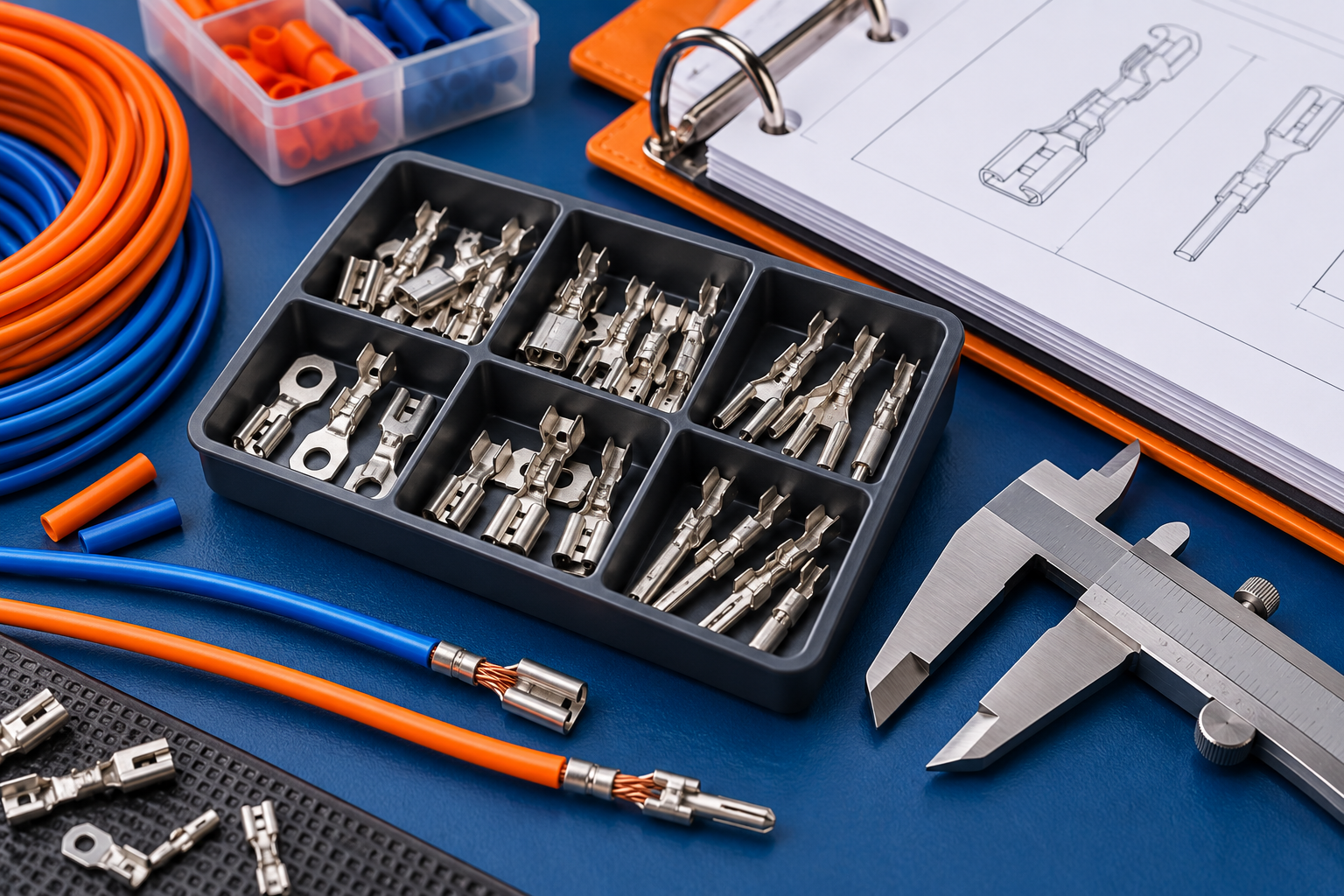
Is the banner an exact 2-2349177-1 rendering? No. It is an approved generic terminal-documentation scene. Use the manufacturer drawing and controlled inspection evidence for exact geometry; neither the illustration nor the automated article review establishes product conformity or suitability.
6. Conclusion and document request
A useful selection outcome is an exact identity, an accessible first-party evidence packet and a visible register of unresolved questions. For 2-2349177-1, preserve the socket-contact identity and resolve the documented wire-range disagreement before process release. Retain the actual decision owner, document revisions and configuration scope so later changes can be assessed.
Send the complete part number, proposed conductor, intended assembly and the conflicting source references through the inquiry channel. Request the applicable current documents and a traceable clarification. Keep the existing workflow of identity, requirement mapping, samples and release, while allowing only supported facts to enter the final engineering and purchasing records.
Official manufacturer sources
Author: Lianxinlian Electronics Product Information Team. Technical data quality review: Lianxinlian Electronics Technical Data Quality Team performs automated source, language and internal-link completeness checks. This is not human engineering approval or product suitability approval.