Build an installation evidence pack for TE 281934-2 AMP SUPERSEAL wire seals, separating insulation diameter, terminal process and assembly sealing requirements.
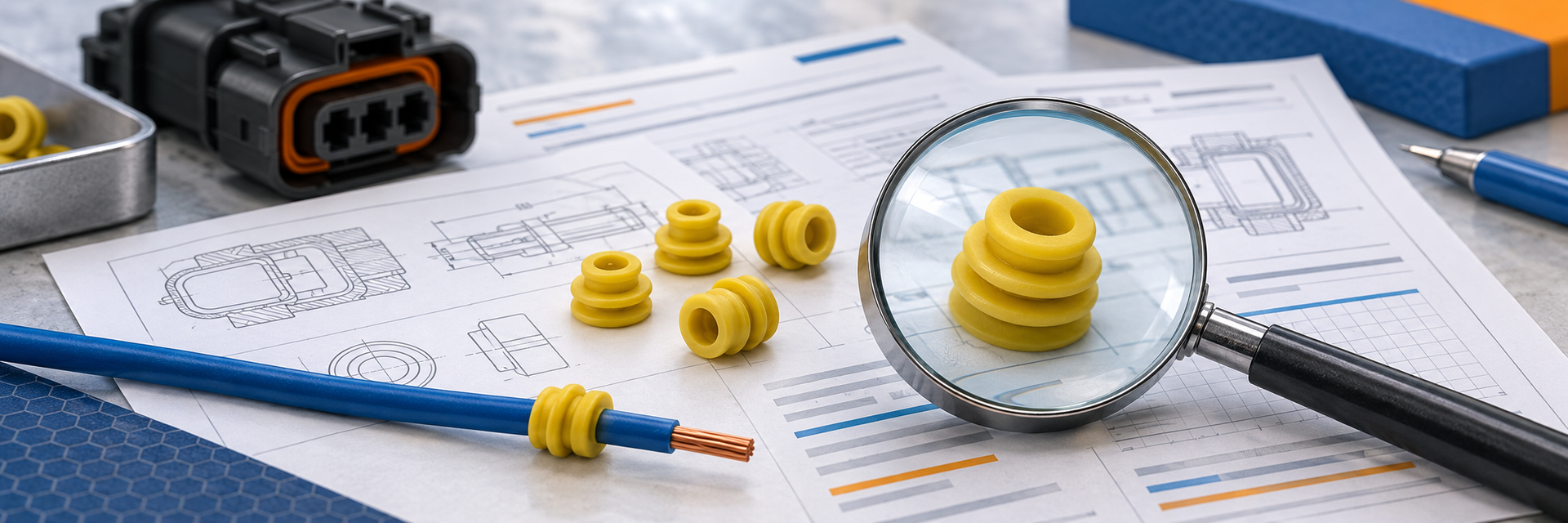
A seal enquiry often starts with a part number and a wire description. An installation review needs a clearer connection between the actual wire, the selected terminal and the housing configuration. This guide uses the real EPPTC 281934-2 record and two public TE sources to organize that review. The banner is an original conceptual inspection scene; its generic rings and connector do not show the exact geometry of this part.
1. Identify the wire seal before reviewing installation
TE identifies 281934-2 within its AMP SUPERSEAL 1.5 mm series and links a customer drawing titled Single Wire Seal. Preserve the complete ordering reference, including its suffix, throughout the enquiry. Keep the manufacturer page and drawing together, with the retrieval date in your document register. Similar descriptions or nearby catalogue numbers should remain separate candidates until their own records are checked.
The official page currently exposes limited detailed features and directs design work to the product drawing. That is a useful boundary for the enquiry: an online title is identity evidence, while the applicable controlled documents must answer the design questions. Do not convert a catalogue description into a complete installation instruction. This article supplies a review workflow and does not assign an assembly rating or approve a wire-and-seal combination.
2. Separate conductor size from insulation diameter
Record the wire manufacturer, complete wire reference and the insulation outside-diameter evidence for the intended lot or controlled specification. Conductor cross-section alone does not identify the outside surface that the seal encounters. Two wires carrying the same conductor-size label may have different insulation constructions; review the actual wire document instead of inferring fit from that label. Keep any missing diameter or tolerance information visible as an open question.
Use the current TE drawing to locate the row for the complete seal number, then review its column headings and applicability with the wire evidence. This guide deliberately gives no numerical fit recommendation: the exact configuration and its tolerances must be checked in the controlled project review. A measurement, supplier reply or drawing excerpt should identify what was observed and which revision it refers to, so the next reviewer can reproduce the comparison.
3. Keep terminal process and housing evidence distinct
List the proposed terminal, housing and mating component separately from the wire seal. Request the terminal application instruction applicable to the selected wire and tooling. A seal drawing cannot establish crimp settings, strip length or tool adjustment for another component. Keep the requested process document in the evidence pack even when the seal identity has already been confirmed; closing one question should not conceal the remaining assembly questions.
Distinguish a wire seal used around an occupied wire path from the documentation needed for an unused cavity. Do not assume that this single-wire-seal reference is an approved cavity plug or that its series name validates every housing. If the intended connector has unused positions, identify their treatment through the exact housing and accessory documents. Any proposed substitution needs its own evidence and change review rather than a visual comparison.
4. Use a traceable installation handoff checklist
- Identity: retain full seal, wire, terminal and housing references.
- Evidence: register document numbers, visible revisions and unresolved requests.
- Process: connect the applicable instruction to the actual tooling and assembly.
- Traceability: preserve lot labels, inspection observations and change decisions.
Receiving observations and assembly performance evidence answer different questions. Preserve visible identity or damage observations without calling them a completed sealing qualification. Define acceptance criteria and test responsibilities through the project process for the intended configuration. If a component or wire construction changes, reopen the affected checks and retain the resulting disposition. The records should show both the evidence obtained and the limits that remain.
5. FAQ: colour, family names and catalogue links
Can colour alone select a wire seal? No; use the complete reference and applicable drawing. Does the SUPERSEAL family name prove a waterproof assembled harness? It does not establish the qualification of your actual configuration. Can a similar seal replace 281934-2? No replacement relationship is established here. Keep every alternative as a separate candidate until the controlled comparison and project disposition are complete.
The EPPTC product has real category and SUPERSEAL series links. The automotive application directory below is a discovery aid; this product record has no confirmed application mapping. The navigation deliberately opens direct English catalogue pages, including from the Chinese article, to avoid unstable catalogue language redirects. Those destinations help locate records and enquiry channels; they do not establish availability, price or suitability for a vehicle programme.
6. Conclusion: request a complete evidence pack
Start the installation enquiry with the full 281934-2 reference and the actual wire specification, then request the missing terminal and housing documents. Keep source revisions, open questions and assembly responsibilities together. Send the product information team that configuration so the response can address a specific evidence gap. Source, language and link completeness are automatically reviewed; engineering acceptance and product suitability remain decisions for the responsible project process.
Official manufacturer sources
Author: Lianxinlian Electronics Product Information Team. Technical data quality review: Lianxinlian Electronics Technical Data Quality Team automatically checks source access, language separation and internal-link completeness. This is not human engineering approval or product suitability approval.