Resolve common questions about TE DEUTSCH 1062-16-0122 socket contacts by separating part identity, housing retention, sealing and harness process evidence.
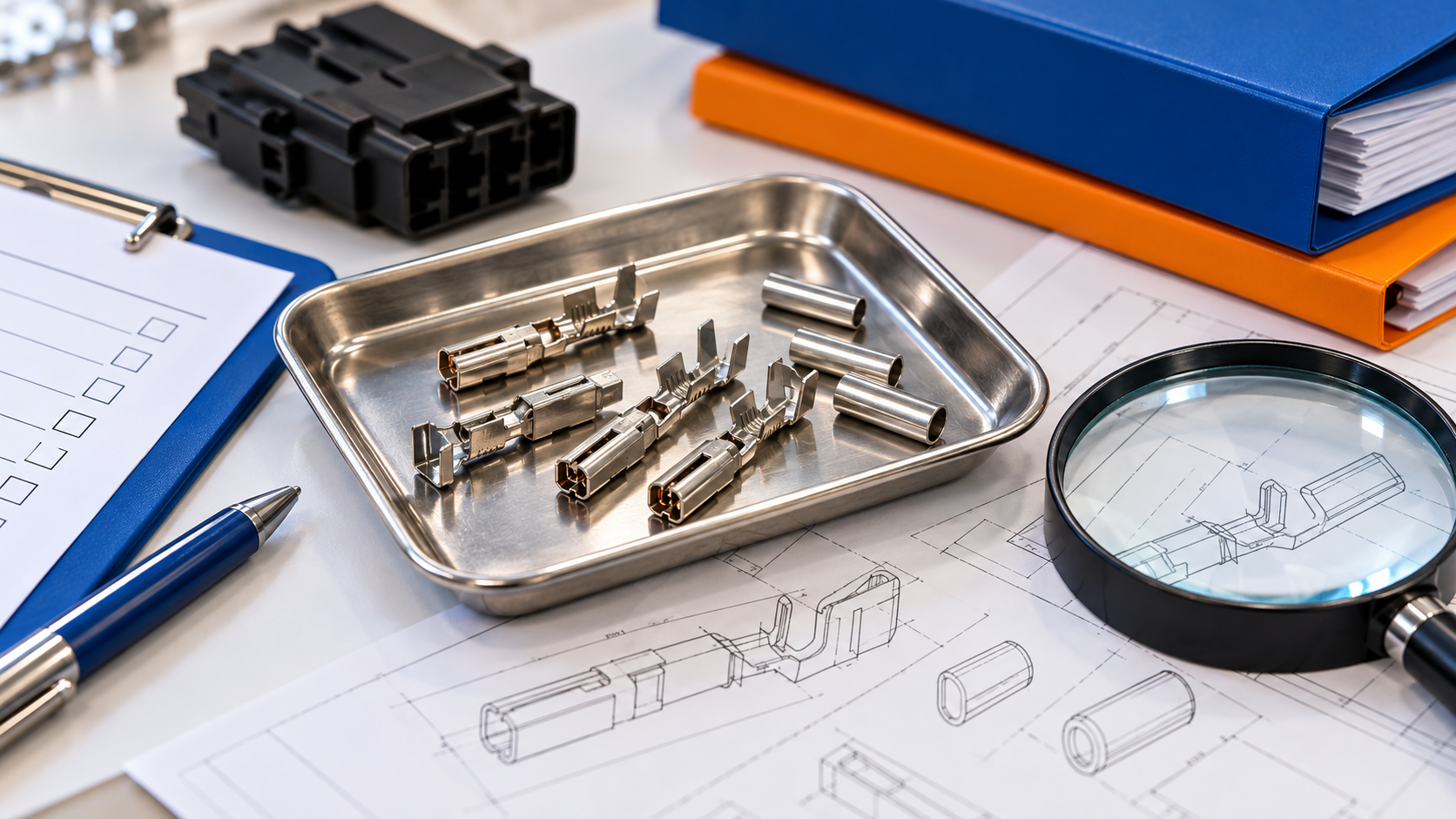
1. Is this a socket contact or a complete connector?
A request for a DEUTSCH connector can refer to a housing, a loose terminal or an entire harness interface. Resolve that ambiguity before comparing offers. TE identifies 1062-16-0122 as a socket terminal in DEUTSCH Common Contact, and EPPTC publishes the same complete reference. Use the exact number as the enquiry anchor, then identify which other components the project expects to receive. A terminal listing alone does not describe a complete connector kit.
Keep the full reference on the purchase line, sample label and document register. If a supplier proposes a packaging suffix, alternate finish or another contact construction, record it as a separate proposal and request its own source. Similar wording is useful for discovery, but it is a weak basis for merging two identities. Retain the manufacturer description and the project description in separate fields when their terminology differs.
2. What does the housing retention field mean?
The TE record describes the primary locking feature as integrated in the housing. Read that as a prompt to identify the intended housing and its applicable assembly instructions. It does not name every acceptable housing or establish the condition of a physical cavity. Ask for the exact housing reference, contact position and controlled document before deciding how insertion, retention verification or service removal will be performed.
When a contact backs out, preserve the sample state and document the observed symptom. Do not assume that the terminal itself, the housing latch or the assembly method is the cause before inspection. Useful questions distinguish an identity mismatch from visible damage, an incomplete assembly step and an unresolved inspection requirement. Photographs can support this record, while the applicable manufacturer instructions define the method and acceptance criteria.
3. Does a socket contact establish a sealed harness?
A contact record and a completed harness have different evidence needs. Record the proposed housing, mating interface, wire construction, cavity loading and any specified sealing components as separate items. Ask which document governs unused positions and which test requirement applies to the assembled configuration. A family name or a contact photograph cannot answer those questions, and a catalogue observation cannot establish a finished-harness ingress rating.
Keep the environmental requirement beside the assembly configuration rather than copying a rating into a terminal enquiry. If the application owner changes the wire or housing proposal, reopen the affected evidence questions. This makes the review reproducible: another reader can see the configuration considered and the requirement used, instead of finding an unqualified statement that the terminal is waterproof or suitable for every automotive installation.
4. Which drawing and process documents should be requested?
TE links customer drawing 1062-16-01XX and application specification 114-151000 from the exact product page. The drawing contains an explicit 1062-16-0122 row; the application document addresses size 16 stamped and formed contacts. Keep the two roles distinct. Use the exact drawing entry to establish part identity, then determine which process sections and supporting instructions apply to the proposed wire, tooling and assembly.
Before work begins, capture document number, revision, retrieval date and the open applicability questions. Request the controlled instructions used by the responsible process owner rather than turning a drawing dimension into a crimp setting. This FAQ supplies no strip length, crimp height, pull-force limit, extraction tool selection or production acceptance value. Those decisions need the applicable combination and the current documents, with discrepancies resolved by the responsible function.
5. What should an enquiry or issue report contain?
- Identity: full 1062-16-0122 reference, manufacturer and sample or packaging observations.
- Assembly: proposed housing, mating interface, wire specification and cavity assignment.
- Documents: exact drawing row, current process instructions and unresolved applicability questions.
- Issue evidence: observed symptom, affected sample and required decision owner.
Use the Common Contact series and automotive terminals pages to find related catalogue records. The automotive application page is a research route: the local product has a real series association but no confirmed application mapping. None of these links establishes a replacement, vehicle approval or mating decision. Keep stock, pricing and delivery in a separate dated commercial response so that technical document review does not become an unsupported supply promise.
6. Conclusion: close a specific evidence gap
For a TE DEUTSCH 1062-16-0122 connector enquiry, first agree that the subject is a socket contact, then connect it to the proposed housing and harness configuration. Send the product information team the complete reference and the documents already held, with one explicit question for each missing item. The generic banner illustrates document review and does not define exact part geometry. Catalogue destinations below are labelled English pages; both article languages are independently localized.
Official manufacturer sources
TE exact 1062-16-0122 socket-contact record
TE customer drawing 1062-16-01XX, exact part-number table
TE application specification 114-151000, size 16 stamped contacts
Author: Lianxinlian Electronics Product Information Team. Technical data quality review: Lianxinlian Electronics Technical Data Quality Team automatically checks source access, language separation and internal-link completeness. This is not human engineering approval or product suitability approval.